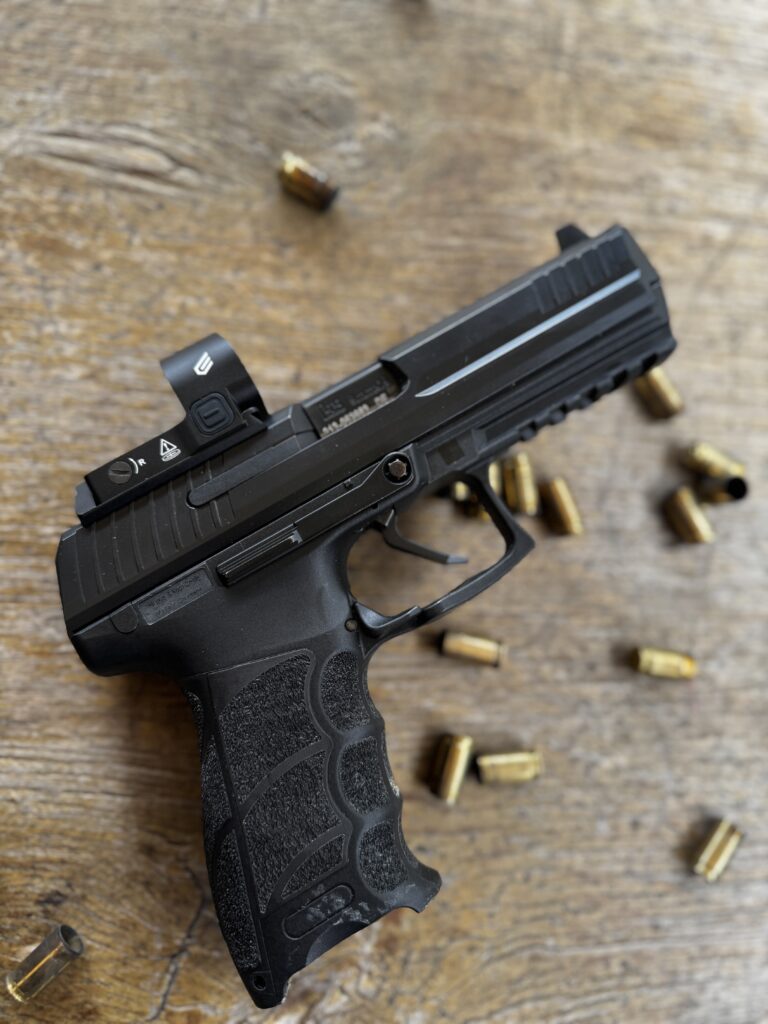
The HK LEM Trigger is often one of the most misunderstood and mis-explained trigger systems on the market. I consider this the best all around trigger system as well, as it performs well in performance shooting and still offers plenty of the safety items people look for in carry guns.
To try and explain the LEM Trigger simply; it is a trigger with a double action length of travel with the break weight of a single action trigger. The takeup on an LEM trigger is something like .5lbs and then once you get to the wall, the wall breaks at a roughly ~4.5lbs. With Langdon Tactical Trigger jobs you can choose even lighter or heavier variants.
I am using the extra light option which is breaking right in-between 3lbs and 3.5lbs. I just used this firearm in USPSA this last weekend and it performed very well. I did not even notice the trigger pull in any way, it just occurred, something that was really apparent with my glocks.
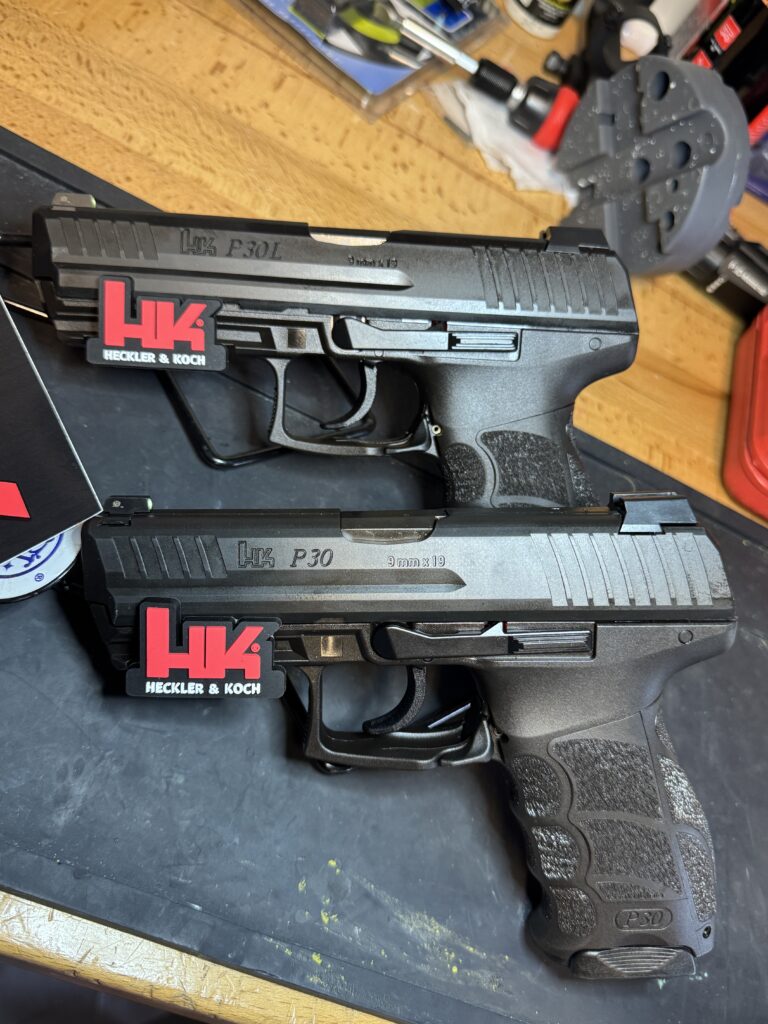
How this trigger came about, was HK analyzed lots of shooting situations and discovered that the weight of the trigger did not necessarily correlate to unintended shootings, but it seemed to be more correlated to the amount of travel a trigger must make prior to ignition.
Thus the LEM was born
Another feature of this trigger system is related to safely re-holstering the firearm. With most striker fired handguns, you cannot disengage the striker or control it while re-holstering. With the LEM you can place your thumb over the hammer, without requiring much force you can prevent any un-intended discharges related to re-holstering.
Other companies have tried to copy this system but have fallen a bit short. With Sig Sauer you have the DAK system, with Beretta you have the Type – C, and lastly the Walther P99 Anti-Stress Trigger.
I do think that everyone should give the HK LEM trigger a try, with my experience I am looking to acquire a HK USP and do the LEM conversion to it. With this it will combine two of my favorite things, the LEM trigger and the performance/aesthetics of the HK USP.
Lucky Gunner also did a great description and history of the system Check it out HERE